

Cholesterol and the Metabolic Syndrome
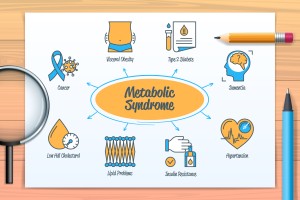 Cholesterol and the metabolic syndrome are tightly linked—mainly through how cholesterol is packaged and handled in the body, not just how much of it there is in the body.
Metabolic syndrome disrupts how cholesterol is transported and processed, leading to high triglycerides, low HDL, and more dangerous LDL particles, which together sharply increase cardiovascular risk.
Here’s the connection:
What is the Metabolic syndrome? A cluster that disrupts lipid metabolism
Metabolic syndrome is diagnosed when several of these occur together:
* Abdominal (visceral) obesity
* Insulin resistance / high blood sugar
* High blood pressure
* Abnormal cholesterol and triglycerides
That last point is where cholesterol comes in.
The characteristic cholesterol pattern in metabolic syndrome
People with metabolic syndrome usually have a specific dyslipidemia pattern (which is a medical condition where there are abnormal levels of lipids (fats) in the blood)
🔴 High triglycerides
* Excess free fatty acids from visceral fat flood the liver
* The liver responds by making more triglyceride-rich particles (VLDL)
🔵 Low HDL (“good cholesterol”)
* Triglyceride-rich HDL is cleared faster from the bloodstream
* Result: less HDL available to remove cholesterol from arteries
Small, dense LDL particle
* Total LDL may be normal or only mildly elevated
* But LDL particles are smaller and denser, making them:
* More likely to penetrate artery walls
* More prone to oxidation
* More atherogenic (plaque-forming)
This is why metabolic syndrome raises cardiovascular risk even when standard cholesterol numbers don’t look terrible.
Insulin resistance is the key driver
Insulin resistance:
* Increases fat breakdown in adipose tissue
* Raises circulating free fatty acids
* Alters liver lipid production and clearance
This creates the “toxic lipid environment” that defines the cholesterol abnormalities in metabolic syndrome.
Why cholesterol matters more here than usual
In metabolic syndrome:
* LDL quality matters more than LDL quantity
* HDL function (cholesterol removal) is impaired
* Triglycerides act as a marker of metabolic dysfunction
That’s why clinicians often pay close attention to:
* Triglyceride / HDL ratio
* Non-HDL cholesterol
* ApoB or LDL particle number (when available)
Big picture: cholesterol is both a marker and a mediator
*Marker: Abnormal cholesterol reflects underlying metabolic dysfunction
*Mediator: Those abnormal lipoproteins actively promote atherosclerosis
So cholesterol isn’t just “along for the ride”—it helps drive the increased heart disease risk seen in metabolic syndrome.
Sign up to receive the MCVitamins Newsletter!
Up-to-date info on the latest health-related news happening in the world
(available in English only)