

Pollution – what is it really and how to survive it
 Even if you live in the country, you are probably breathing polluted air.
We get air pollution from campfires to jet engine exhaust, and of course, the obvious polluter, automobile exhaust fumes. There is cigarette smoke and chemicals emitted by industry, as well as ozone. (Ozone is a form of oxygen that is a bluish, irritating gas of pungent odor, and it is a major agent in the formation of smog.) Many pollutants can be airborne over long distances, and all can enter your system.
Smog contains a long lineup of chemical nasties, including ozone, nitrogen dioxide, sulfur dioxide and tiny particles of everything from asbestos to soot, that can settle deep in the lungs and cause general havoc.
You should be especially aware of this fact if you work outdoors in a large city. You may be exposing yourself to more than one ton of pollutants – including heavy metals, carbon monoxide, and ozone – every year.
A high concentration of or long exposure to any one of these chemicals can cause shortness of breath, wheezing, coughing, bronchitis, pneumonia, headaches, inability to concentrate, chest pain, and, in some cases, lung cancer. Breathing polluted air changes the way that the lung cells do business.
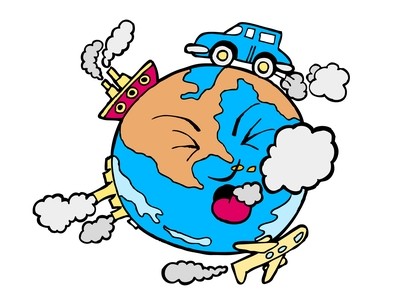 Smog can make the lung cells vulnerable to attack by bacteria and viruses. Smog can kill cells, making the lungs less efficient at doing their job of gas exchange (absorbing oxygen and releasing carbon dioxide).
Many of the harmful interactions between the noxious substances in smog and lung cells happen during the chemical process known as oxidation. During oxidation, free radicals, which are unstable molecules of harmful chemicals, snatch electrons from the healthy molecules that compose the cells in order to balance themselves. This starts a chain reaction of electron stealing. The end result is serious damage to cells.
(See article Free Radicals and Antioxidants)
The hormone system is very sensitive to environmental chemicals. These contaminants can mimic hormones. The body gets confused, and the artificial “hormone” connects to the cell receptors. When the cell receptors are full up with these false hormones, the real hormone cannot find a place to connect to the cell (sort of like trying to find a parking space in NYC). As time goes by, these receptors get full. The glands don’t have a place to send their hormones to, and the body can weaken. One of the main symptoms of this is the accumulation of fat as the cells cannot burn it anymore. This is not only when you get older, as younger people exposed to this environmental toxicity develop the same problems. Weight gain is a symptom of a physical problem. It is not the problem. The correct problem can be found in these pollutants.
There are such things as Endocrine disruptors. The EPA (Environmental Protection Agency) is doing research on this. An endocrine disruptor is an environmental poison that mimics, blocks, or otherwise disrupts the normal function of hormones. These disruptors are pesticides, herbicides, fungicides, plastics, solvents, and heavy metals. The EPA found that 90-95% of all pesticide residues are found in meat and dairy products.
What to do about environmental pollutants
You should avoid pollution as much as possible by not running along heavily trafficked roads.
However, if you can’t avoid it entirely, and most people living in a city can’t, you may want to protect yourself by taking nutrients that provide a measure of internal pollution protection:
Vitamin A
You need vitamin A to protect your eyes, lungs, and the oxygen-carrying capabilities of your bloodstream. Vitamin A helps shield the lungs from air pollution. Some chemicals, like DDT, deplete the liver of vitamin A so that a vitamin A-deficient diet would increase the possibility of damage from this insecticide.
Vitamin C
One of the reasons is the cadmium toxicity, which is in the air. The accumulation of cadmium in organs and the severe anemia risks associated with cadmium toxicity are prevented with Vitamin C antioxidants.
Vitamin E
Vitamins C & E work together in the lungs to keep the cells healthy. It can build up levels of protective protein that prevent enzymes released during inflammation from destroying the lung’s elastic properties.
Vitamins A and E are used up by pollutants or stress.
Vitamin E and the related protective systems now appear to be among the most important defense systems. It can be found in wheat germ, certain vegetables, nuts, seeds, and vegetable oils. It is well-known for its ability to enhance the immune system and as an antioxidant. Antioxidants offer their own electrons to free radicals, disarming those renegade molecules and protecting healthy molecules from damage.
Selenium
Acts to prevent the accumulation in your body of toxic deposits of heavy metals. In this role, it is an important protector against pollution. Chemically, it bonds with the metal, thus rendering it less harmful and helping your body to eliminate it. Selenium has proven extremely effective in removing cadmium deposits from your body. Other metals that it can help you excrete are silver, thallium, and excessive copper.
Essential Fatty Acids
Additional dietary adjustments would be to stop eating saturated fats, as there is a reported strong association between saturated fat intake and lung cancer that is common in non-smokers. In order to balance your fat intake, you should be taking essential fatty acids. See article
Calcium
Poisons make the body more acidic. (Read more about an acid body). The body needs calcium to counteract this and bring the body to a neutral, healthy state.
What to take:
Discover How Whole Food Nutrition Can Help… Click here for antioxidants along with the other supplements you need daily.
HOW TO BUILD HEALTH – Getting educated in nutrition and how the body works will take you on the road to good health. We found a great science-based program to learn the basics so you know what you should be eating and what you shouldn’t be eating and WHY
Go to Eat Well Nutritional Education Course – Learn to Understand Nutrition
STILL HAVE QUESTIONS? EMAIL AND GET YOUR QUESTIONS ANSWERED.
Sign up to receive the MCVitamins Newsletter!
Up-to-date info on the latest health-related news happening in the world
(available in English only)