

Genetically Engineered Foods, GMOs
What is Genetic Engineering?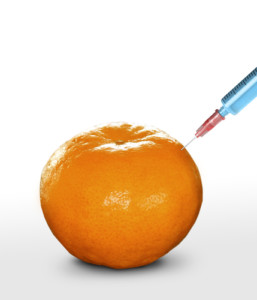
Genetic engineering is a modern form of biotechnology – a broad term describing processes such as cross-breeding, plant hybridization, and fermentation.
While biotechnology has been used by humans for thousands of years, genetic engineering is a relatively new and rapidly developing technology that is raising public concern. Genetic engineering focuses on the manipulation (blocking, adding, or scrambling) of the genetic material (the DNA) inside the cells of living organisms to block or add desired traits.
Examples of Genetic Engineering
Anti-sense technology: A gene controlling a trait is blocked. Example tomato with delayed ripening for fresher flavor.
Recombinant DNA: microorganism to plant: Transfer of genetic material from a bacterium into cells of plants. Example: Insect-resistant corn plants and pesticide-resistant soybeans.
Recombinant DNA: human to animal: Human genes inserted into pigs to produce human hemoglobin.
Recombinant DNA: animal to plant: Fish genes inserted into plants to increase tolerance to cold.
Why use Genetic Engineering?
Proponents of genetic engineering claim many potential benefits of this new technology. Current medical applications include genetically engineered human insulin, human growth hormone, gene probes to detect genetic diseases, Hepatitis B inoculation, monoclonal antibodies to diagnose infections, and tissue plasminogen activator to dissolve blood clots. Some of the more controversial applications of genetic engineering are in the area of food production. The promised benefits of genetically engineered food production include:
- Reduced use of pesticides
- Reduced use of herbicides
- Reduced use of fertilizers
- Enhanced nutrition
- Drought resistance
- Better appearance
- Longer shelf-life
- Better flavor
- Temperature resistance
- Disease resistance
- Increase in food supply. Decrease in world hunger.
What are the potential risks of genetically engineered foods?
Opponents of genetic engineering raise concerns about the safety and ethics of creating novel organisms, as well as the impact that genetic engineering will have on the environment
Specific concerns include:
- Lack of long-term studies on food safety.
- Lack of long-term studies on environmental impact.
- Diminished opportunity for organic/sustainable agriculture
- Potential risk of rendering Bacillus thuringiensis (Bt), a natural biological pesticide, useless due to widespread use of Bt-engineered crops.
- Potential life-threatening danger for individuals with food allergies or sensitivities who might unknowingly ingest altered foods to which they are allergic, sensitive, or intolerant.
- New genetic structure of foods might result in new allergens.
- Toxicity levels of naturally occurring food toxins might result in new allergens.
- The toxicity levels of naturally occurring food toxins might inadvertently be altered.
- Cruelty to animals.
- Unacceptability of creating novel organisms that would not occur through traditional means of reproduction (crossing plants and animals or unrelated species of animals)
- Environmental damage due to cross-pollination and disturbed ecosystems.
- Pesticide tolerance.
- Herbicide tolerance
- Ethical and spiritual concerns.
What food products have been or are being developed with genetic engineering?
- Milk and other dairy products from cows administered rBGH, a genetically engineered growth hormone.
- Soybean, tomato, corn, and canola plants that withstand herbicide application.
- Corn, tomatoes & potatoes with built-in pesticides.
- Potatoes, tomatoes, cantaloupe, squash, cucumber, corn, canola, soybeans & grapes are manipulated to resist plant viruses.
- Peppers and tomatoes engineered to resist plant fungi
- Tomatoes, peas, peppers, and tropical fruitsare manipulated to extend shelf life and improve processing quality.
- Corn, sunflower, and soybeans are engineered to contain altered levels of nutrients.
- Canola and peanuts with altered lipid profiles.
- Coffee beans with altered caffeine content.
- Potatoes that absorb less oil when fried.
- Corn and peas are engineered for a prolonged shelf life.
- Various enzymes (proteins that speed up biological processes) are used to make beer, wine, fruit juice, sugar, oil, baked goods and more.
- Genetically engineered rennet for making cheese.
The main group of GMOs is soy, canola, corn, cottonseed seed and salmon.
Here is an article How do you know if you’re eating real food, not GMO aka Frankenfood?
Is there any way to know if our food has been genetically altered?
Not unless a labeling system is adopted. Currently, the Food and Drug Administration (FDA) does not require labeling of genetically engineered foods except when:
- The new genetically engineered food is nutritionally different from the non-genetically engineered versions.
- The characteristics of the food differ significantly from what is normally expected (e.g., the introduction of allergens or toxins).
Why are labels important?
With labeling, public health officials will be able to trace the cause and course of any unforeseen public health problem caused by the introduction of genetically altered foods (such as the outbreak of Eosinophilic Myalgia Syndrome linked with a genetically engineered brand of amino acid supplement L-tryptophan in 1989).
Labeling of genetically engineered food will enable consumers to avoid products produced in ways contradictory to religious, spiritual and/or ethical beliefs.
Consumers simply have a right to choose for themselves between genetically engineered and non-genetically engineered products.
Here is a sample of designations in North America
General designation is as follows:
- Organic produce has a five-digit number beginning with a 9. Organic bananas, for example, would be given the designation of 94011.
- Conventional produce has a four-digit number beginning with a 3 or 4. Therefore, the number on conventionally grown bananas would be 4011.
- Genetically engineered produce also has a five-digit number on the label and begins with an 8. Again, the number on genetically altered bananas would be 84011.
GE Labeling
In 1992, the FDA declared that biotech foods were the same as conventional foods – because the biotech companies said so. The number 8 was then instituted since the produce industry thought consumers would prefer genetically modified food more so than conventionally grown food. It did not take long for them to find out differently. Although the number 8 designation can still be found, it is rare. The biotech industry is also fighting any sort of labeling for their inventions, now that they know consumers do not want them. As it stands now, Hawaiian papaya is about the only food you will find that has the number 8 in front of it.
Unless the label specifically states “certified organic”, it is a safe bet that any food containing corn, soy, and cottonseed oils has a GE origin. These processed foods will not have the genetically engineered PLU code that would alert the consumer. In addition, manufacturers of GE products are not subjected to any special review, approval, or labeling. The organic producer is, however. Ironic, isn’t it – something that is grown naturally requires more scrutiny than does something containing any number of harmful substances?
What are people doing?
Concerned people and some health food stores (namely WHOLE FOODS MARKET) have been informing others since 1992. They advocated mandatory labeling and encouraged others to write the FDA and other manufacturers to express their concerns. Whole Foods Markets avoid genetically engineered foods.
What can you do?
Let the FDA and your favorite manufacturers know how you feel about the genetic engineering of our food supply. Tell them you would like to make an informed choice of whether or not to purchase foods that have been genetically modified.
You can write to:
Secretary of Agriculture
US Department of Agriculture
200 A. Whitten Building
1400 Independence Avenue SW
Washington, D.C. 20250
You can also write to your Congressman or your state’s Food and Drug Division.
To contact manufacturers, look for their complete address printed on the product packaging.
RECOMMENDED:
If you can’t eat right, you do need supplementation. We found Whole Food Vitamin Supplements that do what it says it will.
Complete Greens
Learn more about Complete Greens – Multivitamins & Superfoods Formula
(Includes Scientific Studies and Product Reviews)
Still have questions? Email us
Sign up to receive the MCVitamins Newsletter!
Up-to-date info on the latest health-related news happening in the world
(available in English only)