

What is Mitochondrial Dysfunction?
How It Affects Your Health and Metabolism: How to address it.
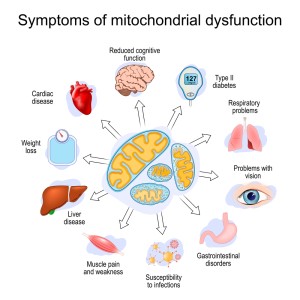 The Mitochondria are tiny organs inside each cell. They convert nutrients from the food you eat into a molecule called ATP, which powers nearly every cellular process. They are called the “powerhouses of the cell” because they produce most of the energy your cells need to function. They are the “batteries” of the cells.
Mitochondrial dysfunction is due to a lack of mitochondria, which are called the “powerhouses” of the cell because they produce most of the body’s energy. Beyond energy production, they also help regulate oxidative stress, calcium balance, cell signaling, and cell survival.
When mitochondria stop functioning properly, cells may not produce enough energy and can experience increased oxidative stress and disrupted cellular signaling. This condition, known as **mitochondrial dysfunction**, is not a disease itself but a cellular process that has been linked to many chronic health conditions.
What does Mitochondrial Dysfunction do?
Mitochondrial dysfunction occurs when mitochondria cannot efficiently perform their normal functions. This can lead to:
* Reduced Energy production
* Increased production of reactive oxygen species (ROS)
* Damage to mitochondrial DNA (mtDNA)
* Impaired regulation of cell signaling and survival
Because nearly every organ depends on healthy mitochondria, dysfunction can affect multiple body systems.
Diseases Associated with Mitochondrial Dysfunction
Research suggests that mitochondrial dysfunction plays a role in the development or progression of numerous diseases.
Neurodegenerative Diseases
Brain Function: Brain cells have high energy demands. Mitochondria help power thinking, memory, and nerve signaling.
Scientists have found strong evidence linking mitochondrial dysfunction to several neurological disorders, including:
*Alzheimer’s disease: Impaired energy metabolism, increased oxidative stress, and mitochondrial DNA damage are associated with neuronal degeneration.
*Parkinson’s disease: Mitochondrial defects may contribute to the loss of dopamine-producing neurons and promote the accumulation of alpha-synuclein, a hallmark of the disease.
*Huntington’s disease and amyotrophic lateral sclerosis (ALS): Abnormal mitochondrial structure and disrupted mitochondrial networks have been observed and may contribute to disease progression.
Overall, mitochondrial dysfunction appears to accelerate neuronal damage by reducing cellular energy and increasing oxidative stress.
Metabolic Disorders
The Mitochrondria contribute to metabolism: They play an important role in how your body uses fats, sugars, and proteins for energy
Mitochondrial dysfunction is closely associated with metabolic problems such as metabolic syndrome, which includes:
* Type 2 diabetes
* Obesity
* Cardiovascular disease
One study from the Harvard T.H. Chan School of Public Health found that altered coenzyme Q metabolism in obese mice increased oxidative stress and contributed to insulin resistance—a key feature of type 2 diabetes. Read also how Mitochondrial Dysfunction creates Degenerative Disease
Muscle-Related Issue
They support your muscles: Your muscles require a lot of energy, so muscle cells contain many mitochondria. Healthy mitochondria help with strength and endurance. This energy is especially important for muscle cells, which require large amounts of fuel to contract, relax, and recover after activity.
When mitochondrial health is poor, muscles are often among the first tissues to show problems. How does this affect muscle functions? See more at Muscle Related Issues
Aging
Mitochondrial function can decline with age.
Studies suggest this decline may contribute to:
* Reduced muscle strength
* Slower walking speed
* Lower physical performance
* Cognitive decline
Scientists also believe accumulated oxidative damage and mitochondrial DNA mutations may contribute to the biological aging process.
Brain Function:
Since the heart beats continuously, its cells are packed with mitochondria to provide a constant energy supply
Neurodevelopmental Disorders
Research is investigating whether mitochondrial dysfunction contributes to conditions such as:
* Autism spectrum disorder
* Bipolar disorder
* Other mental health issues.
While findings are promising, researchers continue to study whether mitochondrial abnormalities are a cause of these conditions, a consequence, or both.
Cardiovascular and Lung Diseases
Mitochondria support the heart:. Since the heart beats continuously, its cells are packed with mitochondria to provide a constant energy supply
Mitochondrial dysfunction has also been implicated in cardiovascular and pulmonary diseases.
Recent multi-omics research suggests that defects in the mitochondrial electron transport chain may contribute to pulmonary arterial hypertension by disrupting normal cellular energy metabolism.
See also Support Your Heart and Energy
How Mitochondrial Dysfunction Damages Cells
Scientists have identified several key mechanisms through which dysfunctional mitochondria contribute to disease.
1. Reduced Energy Production
When the electron transport chain does not function efficiently, ATP production falls, leaving cells with less energy to perform normal functions.
See also Mitochondria Function and Energy
2. Increased Oxidative Stress
Damaged mitochondria often generate excessive reactive oxygen species (ROS), which can injure proteins, lipids, and DNA.
3. Mitochondrial DNA Damage
Unlike nuclear DNA, mitochondrial DNA is especially vulnerable to oxidative damage. Mutations may accumulate over time and contribute to aging and disease.
4. Impaired Mitochondrial Quality Control
The mitochondria help regulate cell health: Mitochondria are involved in controlling when damaged cells are repaired or removed, which helps maintain healthy tissues. Healthy cells continually remove damaged mitochondria through a process called “mitophagy” while replacing them with new ones. Disruption of this quality-control system has been observed in many chronic diseases.
Recent Research Highlights
Recent studies continue to expand our understanding of mitochondrial dysfunction:
* Researchers have identified a mechanism linking coenzyme Q dysfunction to insulin resistance and obesity.
* NIH-supported research has explored mitochondrial abnormalities in conditions such as myalgic encephalomyelitis/chronic fatigue syndrome (ME/CFS) and Long COVID.
* Experimental models suggest mitochondrial dysfunction may help initiate Parkinson’s disease pathology.
* Large review studies consistently identify mitochondrial dysfunction as a common feature across neurodegenerative, metabolic, and cardiovascular diseases.
READY TO BUILD HEALTHY MITOCHONDRIA?
How to Support Mitochondrial Function?
Nutrients That Support Mitochondrial Function
No single food or supplement can dramatically “boost” mitochondria in healthy individuals. However, several nutrients are essential for normal mitochondrial function and energy production.
B Vitamins
B vitamins help convert food into energy.
Important B vitamins include:
* Vitamin B1 (thiamine)
* Vitamin B2 (riboflavin)
* Vitamin B3 (niacin)
* Vitamin B5 (pantothenic acid)
* Vitamin B12
Good food sources include:
* Beef liver
* Eggs
* Salmon
* Legumes
Magnesium
Magnesium is required for hundreds of biochemical reactions, including emergy production.
Food sources include:
* Pumpkin seeds
* Almonds
* Spinach
* Black beans
Coenzyme Q10 (CoQ10)
CoQ10 is an essential component of the mitochondrial electron transport chain.
Dietary sources include:
* Organ meats
* Beef
* Sardines
* Mackerel
CoQ10 supplements are sometimes used for certain mitochondrial disorders, some heart conditions, and by people taking statin medications. Read also: Support Your Heart and Energy
Omega-3 Fatty Acids
Omega-3 fatty acids help maintain healthy cell and mitochondrial membranes.
Sources include:
* Salmon
* Sardines
* Mackerel
* Walnuts
* Flaxseed
Antioxidants
Antioxidants help limit oxidative damage caused by reactive oxygen species.
Foods rich in antioxidants include:
* Blueberries
* Pomegranate
* Spinach
* Kale
* Other colorful fruits and vegetables
Important antioxidant nutrients include:
* Vitamin C
* Vitamin E
* Selenium
* Polyphenols
Alpha-Lipoic Acid
Alpha-lipoic acid functions as both an antioxidant and a participant in mitochondrial energy metabolism.
Food sources include:
* Spinach
* Broccoli
* Organ meats
Iron, Copper, and Zinc
These minerals support enzymes involved in mitochondrial respiration.
Good sources include:
* Red meat
* Shellfish
* Nuts
* Seeds
* Legumes
Eating Patterns That Support Mitochondrial Health
Rather than focusing on individual foods, research generally supports diets that include:
* Plenty of fruits and vegetables
* Legumes
* Healthy fats such as olive oil
* Regular fish consumption
* Adequate protein
* Removing ultra-processed foods
* Healthy blood sugar control
Lifestyle Habits That Have the Strongest Evidence
While nutrition is important, lifestyle factors appear to have an even greater impact on mitochondrial health.
The strongest evidence supports:
1. Regular aerobic exercise
2. Resistance (strength) training
3. Adequate sleep
4. Avoiding smoking
5. Maintaining a healthy body weight
6. Managing chronic stress
Exercise is especially important because it stimulates “mitochondrial biogenesis” – the process of creating new mitochondria—which improves the body’s capacity to produce energy.
A Mitochondria-Supportive Meal Example
A balanced meal that supports mitochondrial health could include:
* Grilled salmon
* Spinach and mixed greens
* Beans or lentils
* Olive oil vinaigrette
* Fresh blueberries
Together, these foods provide omega-3 fatty acids, magnesium, B vitamins, antioxidants, polyphenols, and high-quality protein that support normal mitochondrial function.
In summary
Mitochondrial dysfunction is a common cellular process rather than a single disease. Growing evidence links it to many chronic conditions, including neurodegenerative diseases, metabolic disorders, cardiovascular disease, aging, and other conditions.
Although researchers continue to investigate exactly how mitochondrial dysfunction contributes to these diseases, maintaining healthy mitochondria through regular exercise, a nutrient-rich diet, adequate sleep, and other healthy lifestyle habits remains one of the most evidence-supported approaches to promoting long-term cellular health.
Recommended:
CoQ10 Supplement Support Your Heart and Energy Naturally with CoQ10
Scientific Studies
Obesity & diabetes: Specific coenzyme Q dysfunction drives ROS overproduction and insulin resistance. (Harvard Chan School of Public Health)
NIH research: Mitochondrial disruption linked to conditions like ME/CFS and Long COVID via altered energy production. (National Institutes of Health NIH)
Parkinson’s disease model: Dysfunctional mitochondria can initiate typical disease pathology. ([gladstone.org)
Review synthesis: Mitochondrial dysfunction is recognized across major diseases (metabolic, cardiovascular, neurodegenerative). (PubMed])
Why This Matters
[1]: https://www.mdpi.com/2076-3921/12/4/782?utm_source=chatgpt.com “The Key Role of Mitochondrial Function in Health and Disease”[2]: https://pubmed.ncbi.nlm.nih.gov/36942213/?utm_source=chatgpt.com “Mitochondrial dysfunction: A notable contributor to the progression of Alzheimer’s and Parkinson’s disease – PubMed”[3]: https://gladstone.org/news/evidence-builds-disrupted-mitochondria-cause-parkinsons?utm_source=chatgpt.com “Evidence Builds for Disrupted Mitochondria as Cause of Parkinson’s”[4]: https://arxiv.org/abs/2406.16977?utm_source=chatgpt.com “Disruption of the mitochondrial network in a mouse model of Huntington’s disease visualized by in tissue multiscale 3D electron microscopy”[5]: https://pubmed.ncbi.nlm.nih.gov/40295342/?utm_source=chatgpt.com “Advances in research on mitochondrial dysfunction in neurodegenerative diseases – PubMed”[6]: https://hsph.harvard.edu/news/newly-discovered-mechanism-of-mitochondrial-dysfunction-in-obesity-may-drive-insulin-resistance-and-type-2-diabetes/?utm_source=chatgpt.com “Newly discovered mechanism of mitochondrial dysfunction in obesity may drive insulin resistance and type 2 diabetes | Harvard T.H. Chan School of Public Health”[7]: https://pubmed.ncbi.nlm.nih.gov/36371805/?utm_source=chatgpt.com “Mitochondrial Dysfunction and Intrinsic Capacity: Insights From a Narrative Review – PubMed”[8]: https://en.wikipedia.org/wiki/Mitochondrial_theory_of_ageing?utm_source=chatgpt.com “Mitochondrial theory of ageing”[9]: https://www.frontiersin.org/journals/psychiatry/articles/10.3389/fpsyt.2024.1389093/full?utm_source=chatgpt.com “Frontiers | A systematic review on the role of mitochondrial dysfunction/disorders in neurodevelopmental disorders and psychiatric/behavioral disorders”[10]: https://respiratory-research.biomedcentral.com/articles/10.1186/s12931-025-03099-8?utm_source=chatgpt.com “Dysfunction in mitochondrial electron transport chain drives the pathogenesis of pulmonary arterial hypertension: insights from a multi-omics investigation | Respiratory Research | Full Text”[11]: https://www.nih.gov/news-events/nih-research-matters/mitochondria-health?utm_source=chatgpt.com “Mitochondria and health | National Institutes of Health (NIH)”[12]: https://pubmed.ncbi.nlm.nih.gov/37107158/?utm_source=chatgpt.com “The Key Role of Mitochondrial Function in Health and Disease – PubMed”
Do you have questions? Contact Us.
Sign up to receive the MCVitamins Newsletter!
Up-to-date info on the latest health-related news happening in the world
(available in English only)