

Insulin Resistance or Pre-Diabetes
How is Insulin Resistance part of the “Metabolic Syndrome”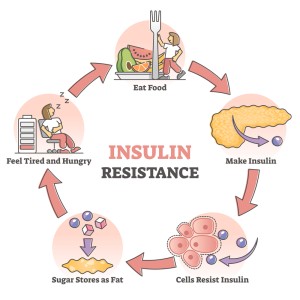
The human body developed on this planet over the past 2 million years. During all but the last 8,000 of those years (and 8,000 years when you are talking of an evolutionary time frame is but the blink of an eye), the human body evolved eating meat, fat, and high fiber vegetables, with some roots and tubers. How did it result in insulin resistance?
Eight thousand years ago, the “agricultural revolution” took place, with man learning how to domesticate grain. Virtually overnight, man became dependent upon carbohydrates as the main source of food. Archeologists point to that exact time period when the average height of man drops by two inches, and all of the degenerative diseases we have today became prevalent in the society of that time.
With today’s accepted high-carbohydrate diet, it is projected that by the year 2025, there will be over 300 million diabetics planet-wide. It is just not the diet our bodies evolved with.
What is insulin resistance?
Carbohydrates are simply long chains of sugar molecules hooked end-to-end. When a person eats carbohydrates, their normal digestive process breaks up these chains into the individual sugar molecules, and they pass right through the intestinal wall into the bloodstream and loading up the bloodstream with sugar.
If this happened every once in a while, it would not be a problem. But as diets today are so high in carbohydrates, people have a constant high level of sugar pouring into their bloodstream year after year.
This requires their body to continuously produce high levels of insulin to keep that sugar level down. (Insulin’s job is to push sugar out of the bloodstream into the cells where it is used for energy.)
Eventually, the cells in their body become insensitive to the effects of the insulin (insulin resistance). To handle this problem of insulin resistance their body begins to produce even higher levels of insulin. This continues until their pancreas reaches the maximum amount of insulin it can produce, and when the insulin resistance increases again, their blood sugar begins to rise out of control.
The result is type 2 diabetes. Type 2 diabetes is an extreme case of insulin resistance, or “pre-diabetes”.
Insulin Resistance Symptoms
The biggest indicator of Insulin Resistance is that you are hungry after a meal or you want something sweet after a meal. This indicates that nutrition is not getting into the cells to create energy, and thus you still feel hungry.
Other symptoms:
Unexplained weight gain: Excess (over-produced) insulin is not excreted – it is stored as fat in the body. This is one reason why people with insulin resistance gain weight more easily than those who are not insulin resistant. The excess weight is carried around the abdomen.
Excess facial and body hair, especially on girls and women, can be another sign of insulin resistance.
High blood sugar (blood glucose), but they may also have episodes of low blood sugar or even normal blood sugar levels; High blood pressure, sleep problems, mood swings, fatigue, brain fogginess and inability to focus, sleepiness, especially after meals, and increased hunger can all be symptoms.
Depression due to unbalanced metabolism and hormones caused by insulin resistance (insulin is a hormone, too much will unbalance the other hormones).
Women and girls who have irregular or absent periods should be checked for insulin resistance (again, the unbalanced hormones).
Insulin Resistance Made Easy
Insulin Resistance (or Prediabetes) Diet Plan
The best diet for insulin resistance follows the guidelines below:
Avoid simple sugars – These cause the pancreas to overproduce insulin. They also lack B vitamins and other essential nutrients, which are needed to metabolize sugar into energy. Simple sugars come in a variety of forms called: sugar, fructose, glucose, corn sweeteners, corn syrup, fruit sugar, table sugar, and brown sugar. They are found in alcoholic beverages and are hiding in many canned, packaged, and frozen foods.
Insulin resistance and artificial sweeteners? – Use stevia, it is an herb.
Eat vegetable protein – nuts, & seeds.
Eat lots of vegetables, especially green vegetables.
Add fiber-rich foods – sluggish digestion or constipation can benefit. It can help slow down the absorption of glucose into the intestinal capillaries. Slower absorption allows a more gradual release of insulin and faster normalization of blood sugar levels after meals.
Avoid caffeine and nicotine – these overstimulate the adrenal glands. When these and other stressors and a generally poor diet are combined, the adrenals can enter into a state of emergency. They become depleted of important vitamins such as B complex and C.
Diet: A low-carbohydrate diet and sustained regular exercise will help with lowering the levels of blood sugar and thus insulin.
Experts recommend a low-carbohydrate diet in which a significant part of the total carbohydrates are obtained from green vegetables. The low-carbohydrate diet should only include between 20-30 carbohydrates a day.
Camel Milk – It has been shown to improve insulin sensitivity in people using it. See Information and Research
Healthy fats in the diet is excellent as it doesn’t stimulate insulin production.
Best Diet for Insulin Resistance
Or eat low carb for 2 weeks and see if you feel better.
Supplement the diet – providing the body with overall support. Consider supplements with adrenal extracts, glucose tolerance factor, zinc, and chromium, nutrients that allow insulin to do its job more effectively. B vitamins supply crucial enzyme cofactors essential for carbohydrate metabolism. L-carnitine, L-glutamine, and vitamin B6 help lessen cravings for sugar. Vitamin E increases energy naturally. Also consider supplements that nourish specific digestive organs associated with hypoglycemia – liver, adrenal, and pancreas.
You can learn more about hormones – insulin is a hormone produced by the pancreas- at Hormones
RECOMMENDED:
Diet is what is needed to restore health and create insulin sensitivity. You can read about this diet here. For added nutrition, add a metabolic formula with Camel Milk. Read why Camel Milk has beneficial effects on Insulin Resistance
This is where we’ve researched (there were a lot of formulas for insulin resistance) and found one we found works.
For a Glucose vitamin formula to build healthy blood sugars, we found Glucose Support Biotect™ Created by Joel Furhman, M.D. (Includes Scientic Studies and customer reviews)
STILL HAVE QUESTIONS? CALL 818 252-1038 OR EMAIL AND GET YOUR QUESTIONS ANSWERED.
Sign up to receive the MCVitamins Newsletter!
Up-to-date info on the latest health-related news happening in the world
(available in English only)